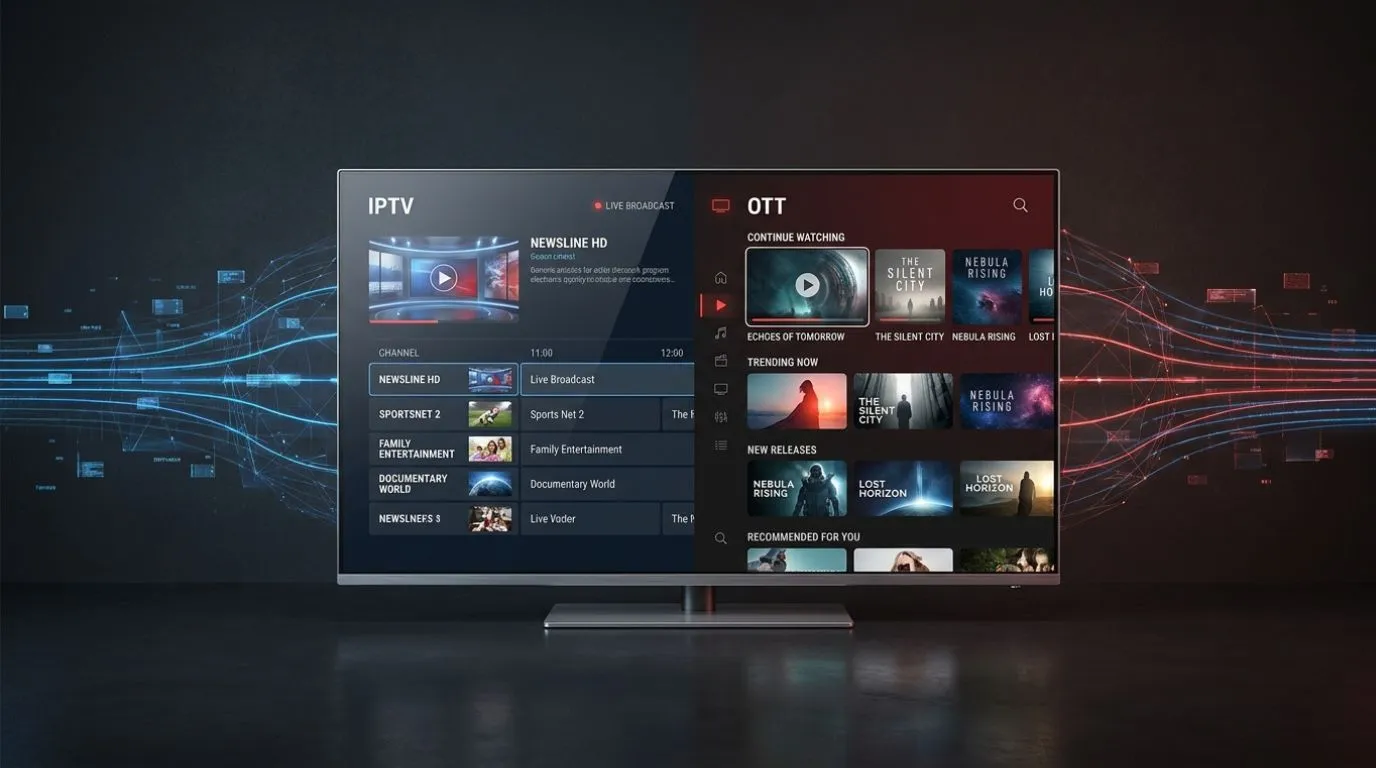
If you are comparing IPTV vs OTT, you may be wondering whether they are actually different types of streaming or simply two names for the same thing. Both deliver video using internet-based technology, but they can differ significantly in how content reaches viewers, how networks are managed, and how services are designed.
For someone choosing an internet-based TV or streaming service, understanding that difference can make it easier to decide what fits their viewing habits.
The short answer is that IPTV typically refers to television delivered over an IP network, often within a provider-managed environment, while OTT generally describes video delivered over the public internet directly to viewers. However, the two concepts can overlap, and neither is automatically better in every situation.
Table of Contents
IPTV vs OTT at a Glance
The easiest way to understand the ott vs iptv comparison is to look at the basic differences first.
| Feature | IPTV | OTT |
|---|---|---|
| Delivery | Television delivered using IP technology, often through a managed network | Video delivered over the public internet |
| Common content | Live TV channels, TV programming, video on demand | Movies, series, live streams, and other on-demand content |
| Network control | The provider may have greater control over the delivery network | Delivery generally depends on the user’s internet connection and broader internet infrastructure |
| Typical experience | Often designed around channels and television-style navigation | Usually centered around apps, libraries, and on-demand viewing |
| Common devices | Set-top boxes, Smart TVs, streaming devices, and compatible apps | Smart TVs, streaming devices, phones, tablets, computers, and browsers |
| Main strength | TV-focused viewing and live channel experiences | Flexible internet-based access to on-demand and live content |
The important point is that this is a comparison of delivery models, not a simple contest between two technologies.
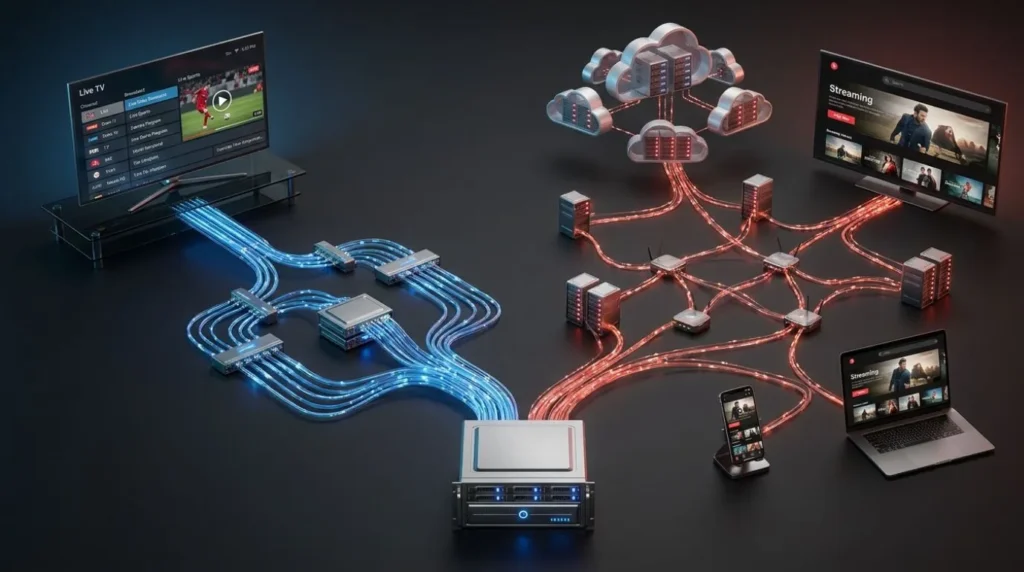
Modern services can combine characteristics associated with both IPTV and OTT.
How IPTV Delivers Television
IPTV stands for Internet Protocol Television. Instead of delivering television through traditional broadcast, satellite, or cable distribution methods, IPTV uses IP networks to transmit television content.
The exact architecture depends on the provider.
In a traditional managed IPTV environment, the provider can control important parts of the network used to deliver television. This can help the provider design the service specifically around television viewing, including live channels, electronic program guides, and video-on-demand features.
IPTV is therefore often associated with a more traditional TV experience delivered through IP technology.
IPTV and Live TV
One of the strongest associations with IPTV is live television.
An IPTV service can organize content into channels that viewers browse much like traditional television. Depending on the service, users may also have access to features such as:
- Electronic program guides (EPGs)
- Live channel navigation
- Catch-up television
- Video on demand
- Program information
- Multiple device support
The exact features depend on the provider and application.
Managed Networks and IPTV
A key part of the ott and iptv difference is the network environment.
Traditional provider-based IPTV can operate over a managed network in which the service provider has substantial control over how television traffic is delivered. This differs from a typical OTT service, which generally sends video across the public internet.
That distinction can affect how the service is engineered and delivered, although it does not mean that every IPTV service will automatically perform better than every OTT service.
How OTT Streaming Works
OTT stands for Over-the-Top. The term generally describes video and other media services delivered over the internet without relying on the traditional television distribution system controlled by a cable or telecom TV provider.
When you open a streaming app, sign into a streaming platform, select a movie, and watch it over your internet connection, you are using an OTT-style service.
Common examples include services such as Netflix, YouTube, Hulu, Disney+, and Max.
OTT has become particularly popular because it allows video services to reach viewers across a wide range of internet-connected devices.
OTT and On-Demand Viewing
OTT is strongly associated with on-demand entertainment.
Instead of starting with a traditional channel lineup, viewers often browse a content library and select exactly what they want to watch.
This model works particularly well for:
- Movies
- TV series
- Original programming
- Documentaries
- User-generated videos
- Live events
- On-demand content
However, OTT is not limited to on-demand video. Many OTT platforms also offer live channels, sports, news, and other real-time programming.
OTT Across Multiple Devices
Another characteristic of OTT services is broad device availability.
Depending on the platform, users may be able to stream through:
- Smart TVs
- Streaming sticks
- TV boxes
- Smartphones
- Tablets
- Laptops
- Desktop computers
- Web browsers
The exact compatibility depends on the individual service and its applications.
IPTV vs OTT: The Key Differences
Understanding the technical definitions is useful, but most viewers really want to know what the difference means in practice.
1. Network and Delivery
The biggest distinction is how the services are delivered.
IPTV has traditionally been associated with provider-managed IP networks. The provider may control more of the infrastructure carrying the television service.
OTT generally uses the public internet to deliver video from a service to the viewer.
This does not mean IPTV avoids the internet altogether. IP is fundamental to both models. The distinction is primarily about the delivery environment and the degree of network control.
2. Live TV vs. On-Demand Content
IPTV is often associated with channel-based television.
A viewer might open a channel guide, select a channel, and watch whatever is currently being broadcast.
OTT platforms are commonly associated with on-demand libraries, where viewers choose a specific movie or episode.
But the distinction is not absolute.
Both IPTV and OTT can support:
- Live television
- Video on demand
- Catch-up content
- Live events
- Recorded programming
The service’s design and business model matter just as much as the underlying delivery terminology.
3. Device Compatibility
The IPTV vs OTT TV experience can also differ depending on the device.
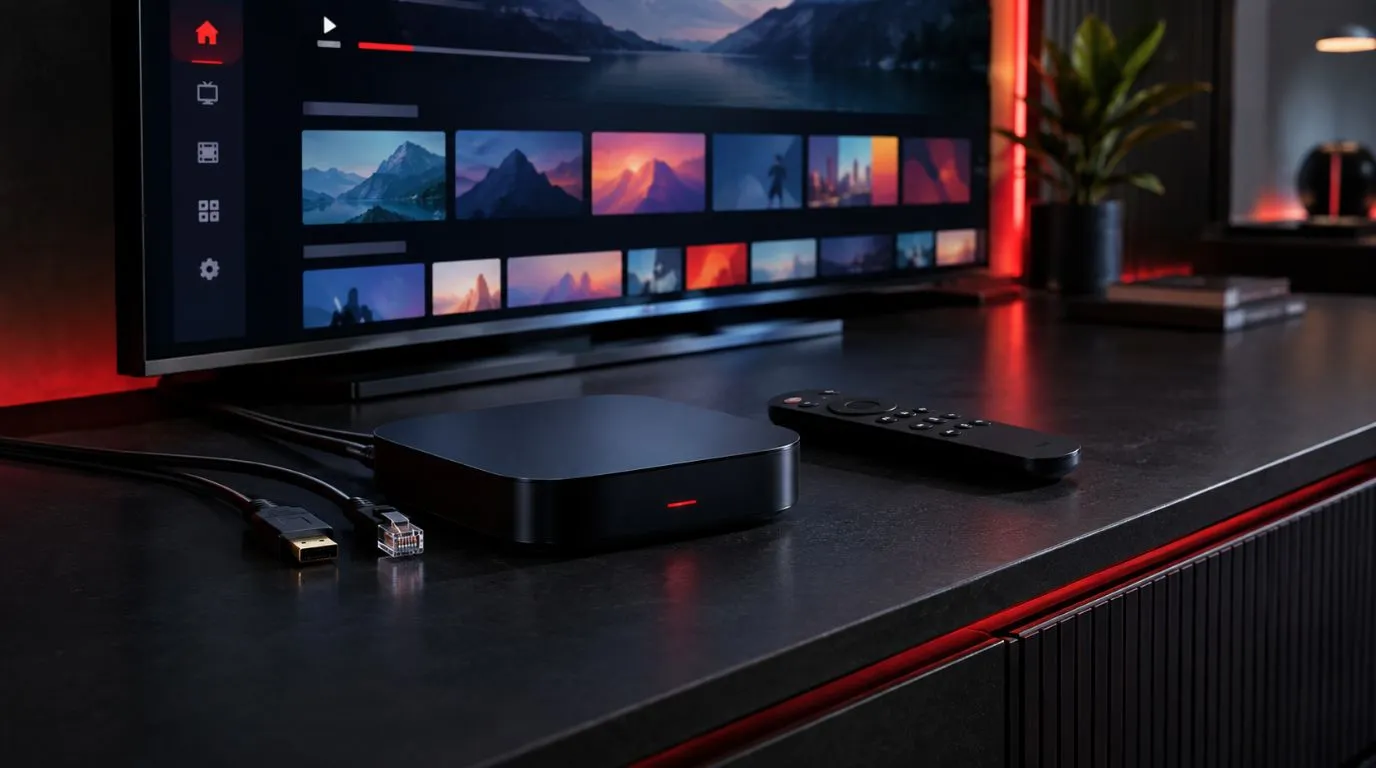
Provider-based IPTV may be designed around dedicated equipment, such as a set-top box, although modern IPTV services can also use applications on Smart TVs and streaming devices.
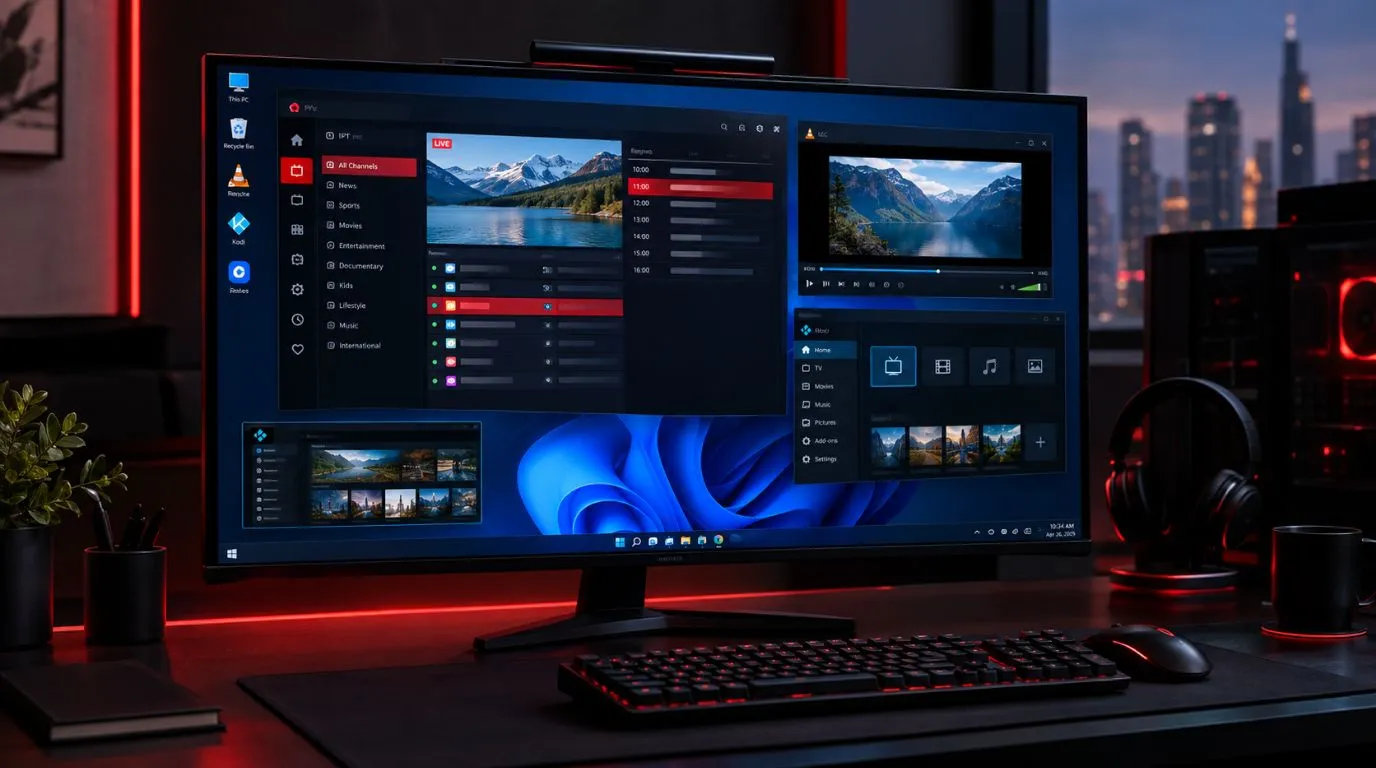
OTT services are typically designed to work across a broad ecosystem of internet-connected devices.
For viewers who regularly move between a TV, phone, tablet, and computer, application and device compatibility can therefore be an important consideration.
4. Quality and Reliability
It is tempting to say that one model always provides better video quality, but that would be misleading.
Streaming quality can depend on several factors:
- Internet connection speed
- Wi-Fi performance
- Network congestion
- Provider infrastructure
- Video encoding
- Adaptive bitrate technology
- Device capabilities
- Server and content delivery infrastructure
A well-engineered OTT service can provide excellent quality, while a poorly operated IPTV service may perform badly. The reverse can also be true.
The delivery model alone does not guarantee a particular viewing experience.
5. Television Experience
IPTV services are often built around the traditional television experience.
That can include:
- Channel lists
- EPGs
- Live programming
- TV-style navigation
- Catch-up features
- Video-on-demand sections
OTT services are often designed around browsing content libraries.
You may see rows of movies, series, recommendations, genres, and personalized content rather than a traditional channel guide.
Neither approach is inherently better. It depends on how you prefer to watch television.
6. Content Distribution
IPTV providers can structure television services around channel packages and scheduled programming.
OTT platforms generally have more of an application-based content model, where users access specific libraries or services.
This creates a practical difference in how people discover content.
If you think in terms of “What is on TV right now?”, a channel-oriented IPTV experience may feel more natural.
If you think “What do I want to watch?”, an on-demand OTT interface may feel more convenient.
IPTV vs OTT for Different Streaming Needs
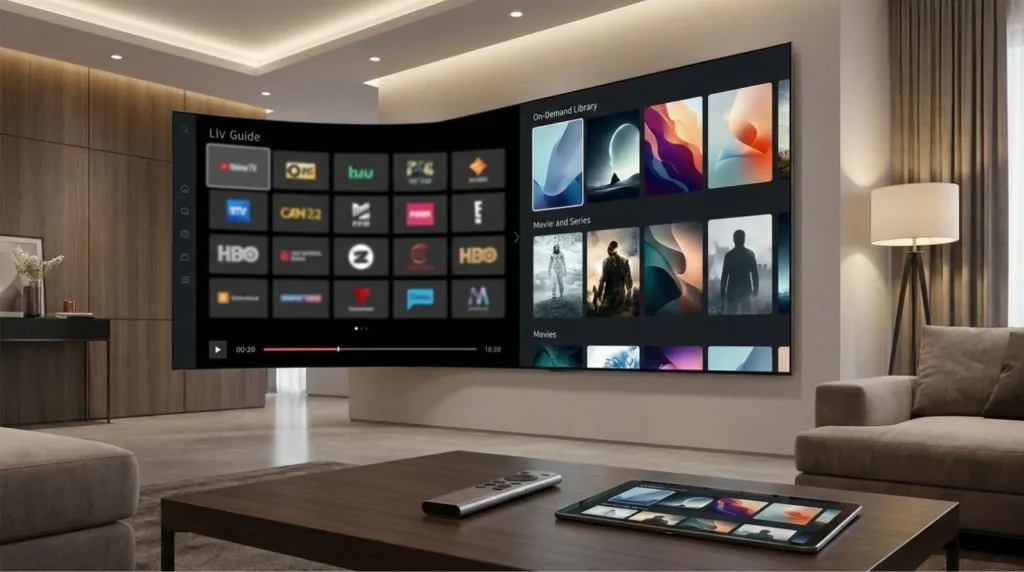
There is no universal winner in the IPTV vs OTT comparison. The better choice depends on what you want from your television service.
If You Mainly Watch Live TV
An IPTV-oriented service may be appealing if your priority is a traditional channel-based experience.
Features such as an EPG, channel categories, live programming, and TV-style navigation can make it easier to browse and watch live content.
OTT can also provide live TV, so the individual service should be evaluated rather than assuming that all IPTV services are better for live viewing.
If You Mainly Watch Movies and Series
OTT is particularly well suited to on-demand viewing.
Instead of following a channel schedule, you can browse a library and select a specific movie or episode whenever you want.
This makes OTT a natural fit for viewers whose primary goal is on-demand entertainment.
If You Watch on Multiple Devices
Device compatibility should be one of the first things you check.
Modern streaming users may switch between a Smart TV at home, a smartphone while traveling, or a computer during the day.
Both IPTV and OTT services can support multiple devices, but compatibility varies between providers and applications.
Before choosing a service, check whether it officially supports the devices you actually use.
If You Prefer a Traditional TV Experience
If you prefer channel lists, live programming, an EPG, and a familiar television-style interface, an IPTV-oriented service may better match your habits.
This is one reason IPTV remains relevant even as on-demand streaming continues to grow.
Is IPTV the Same as OTT?
No. IPTV and OTT are related, but they are not exactly the same thing.
Both use IP-based technology to deliver video, but the terms usually describe different approaches.
IPTV traditionally refers to television delivered using IP technology, often through a network managed by the television or telecommunications provider.
OTT generally refers to media delivered directly over the public internet, outside the traditional television distribution model.
There is also overlap.
For example, an IPTV service can use internet-connected applications, while an OTT service can provide live television channels. As streaming technology has evolved, the boundary between the two has become less rigid than a simple definition might suggest.
The most useful way to think about it is:
IPTV emphasizes television delivery over IP, while OTT emphasizes delivering media over the public internet outside the traditional TV distribution system.
IPTV vs OTT: Which One Should You Choose?
Your decision should start with your viewing habits rather than the technology label.
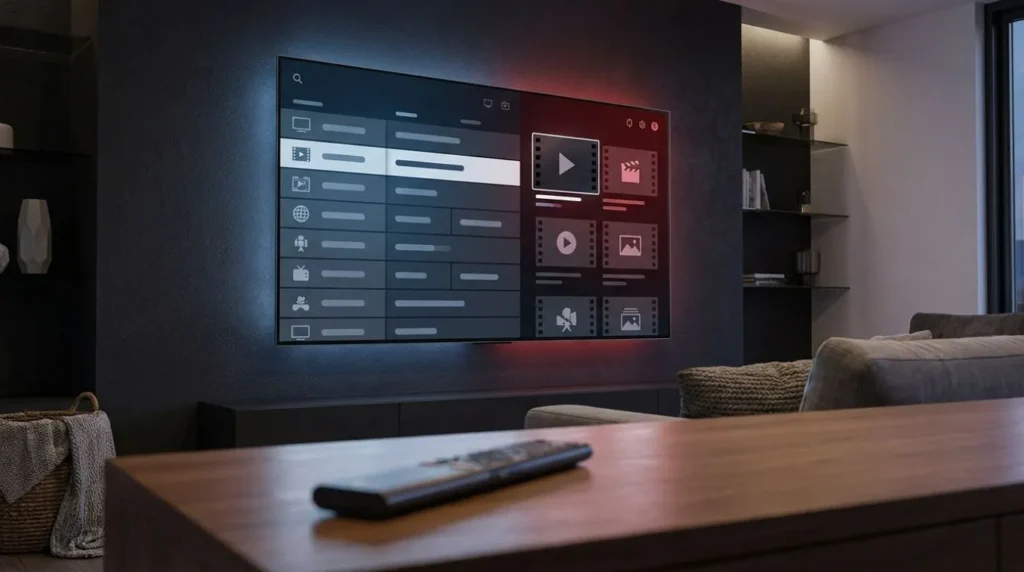
IPTV may be a good fit if you prioritize:
- Live television channels
- A traditional TV-style experience
- EPG functionality
- Channel-based navigation
- Live and on-demand content in one interface
- A television-focused service
OTT may be a good fit if you prioritize:
- Movies and TV series on demand
- App-based streaming
- Flexible device access
- Large content libraries
- Personalized recommendations
- Individual streaming platforms
There is also no reason a viewer cannot use both.
Many households already combine live-TV services with several OTT platforms. The two models can complement each other rather than being mutually exclusive.
What Matters More Than IPTV vs OTT?
The technology behind a service matters, but it is not the only factor that determines whether you will have a good streaming experience.
When evaluating any internet-based TV or streaming service, consider:
Content
Make sure the service actually offers the channels, programs, movies, or other content you want to watch.
Device Support
Check compatibility with your Smart TV, streaming device, smartphone, tablet, or computer before subscribing.
Streaming Quality
Look for a service with appropriate video quality and reliable infrastructure. Your own internet connection and home network also play an important role.
User Interface
A service with the right content can still be frustrating if the interface is difficult to navigate.
Consider whether you prefer a channel guide, a content library, or a combination of both.
Features
Depending on your needs, useful features can include:
- EPG
- Catch-up TV
- Favorites
- Multiple profiles
- Search
- Parental controls
- Multi-device support
Provider Transparency
Before subscribing to any IPTV or streaming service, understand what you are paying for, what devices are supported, what content is included, and what the provider’s terms are.
For a deeper look at IPTV itself, you can also explore ViviMate’s IPTV streaming guide.
Is IPTV or OTT Better for You?
The answer depends on the experience you want.
If you primarily want live channels and a traditional television-style experience, an IPTV-oriented service may be worth considering.
If you primarily want on-demand movies and series through dedicated streaming apps, OTT may be a more natural fit.
And if you want both live television and on-demand entertainment, there are services that combine features associated with both models.
The important thing is not to choose based solely on the label. Look at the actual service, its content, supported devices, streaming quality, features, and overall viewing experience.
If you’re exploring IPTV as an option for your setup, visit ViviMate to learn more about IPTV streaming and available viewing options.